
Real wood, chosen for the conditions
Wood Deck Building in Honolulu, HI
The right species and treatment for each part of the deck, so termites and sun have less to work with.
- Free on-site estimates
- Written, itemized quotes
- Help with permit drawings and the DPP application
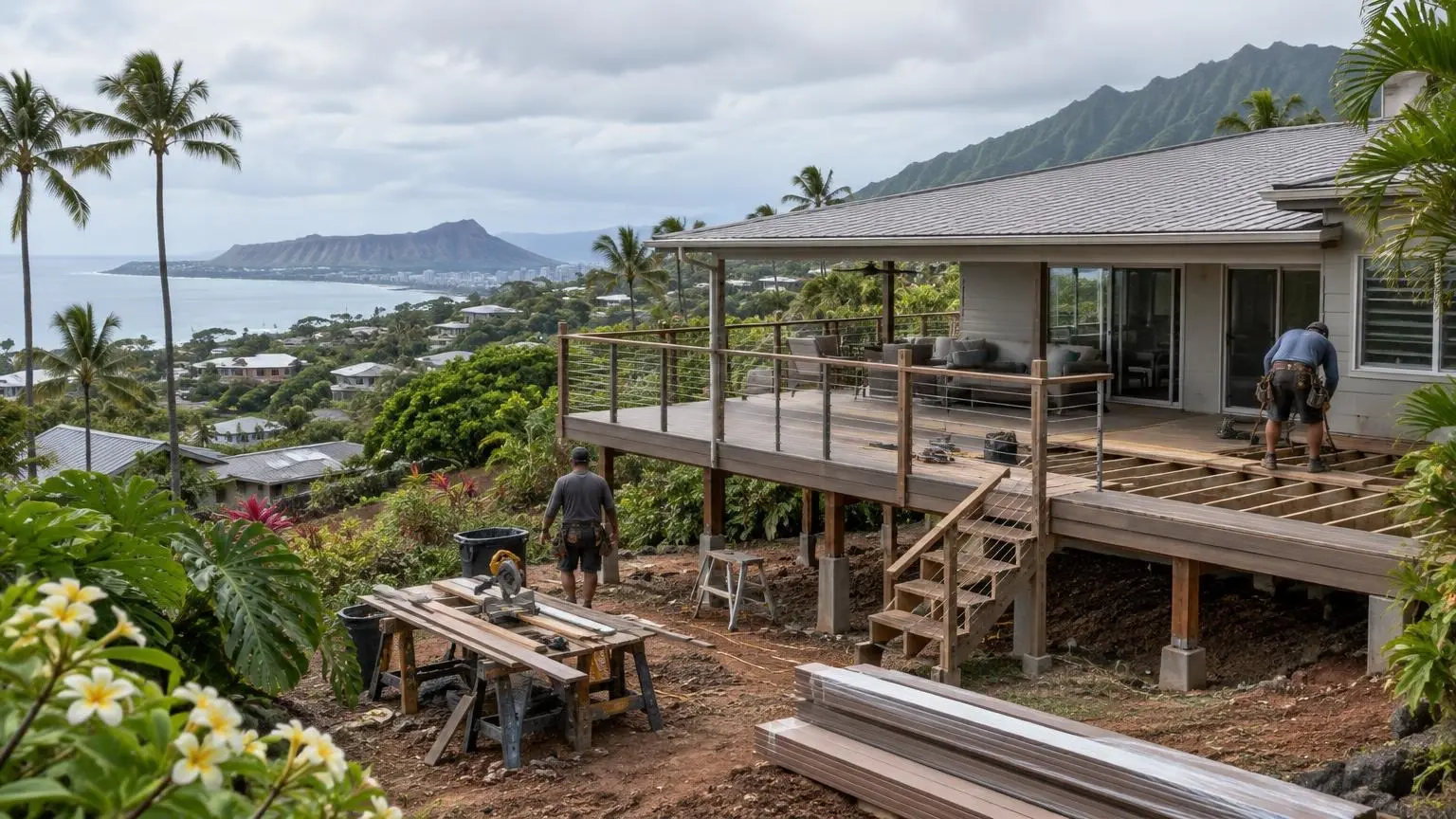
Building With Wood Where Termites Never Rest
Wood deck building on Oahu is all about choosing the right lumber for each job inside the deck. Wood costs less than composite, stays cooler underfoot and has a look many owners prefer, especially on older plantation-style and post-war homes. It also has to stand up to Formosan termites, high UV and, near the water, salt. That comes down to treatment ratings, species and how the deck is detailed.
Treatment ratings, in plain terms
Pressure-treated lumber is sold by use category. Lumber rated for above-ground use is fine for decking boards and joists that stay off the soil and drain well. Posts, and anything close to the ground or hard to dry out, need a ground-contact rating. Borate-treated framing lumber, sold locally as HiBor, protects against termites and rot inside a house, but the supplier's own guide says its warranty excludes decking, deck framing and lumber left exposed to the weather. We list the treatment and use category for each part of the frame on your quote.
Species and what they cost
- Pressure-treated pine or fir: the lowest cost; takes stain well but checks and grays fast without upkeep
- Cedar and redwood: naturally more resistant to decay and pleasant to look at, at a higher price
- Tropical hardwoods such as ipe: very dense, hard and long-lived, but heavy, slow to cut and expensive
Fixr lists installed prices from about $15 to $25 per square foot for pressure-treated decks up to $30 to $55 for ipe. Imported softwoods and hardwoods all ship to Oahu, so availability and price can change from one order to the next.
Details that keep termites out
The University of Hawaii's termite guidance says to remove wood that touches soil and keep water from sitting on wood. We set posts on concrete footings with standoff bases, keep the lowest framing well above grade, leave the area under the deck open enough to look for mud tubes, and haul away every offcut instead of leaving it under the deck. Field cuts on treated lumber get an end-cut preservative.
Sun and finish
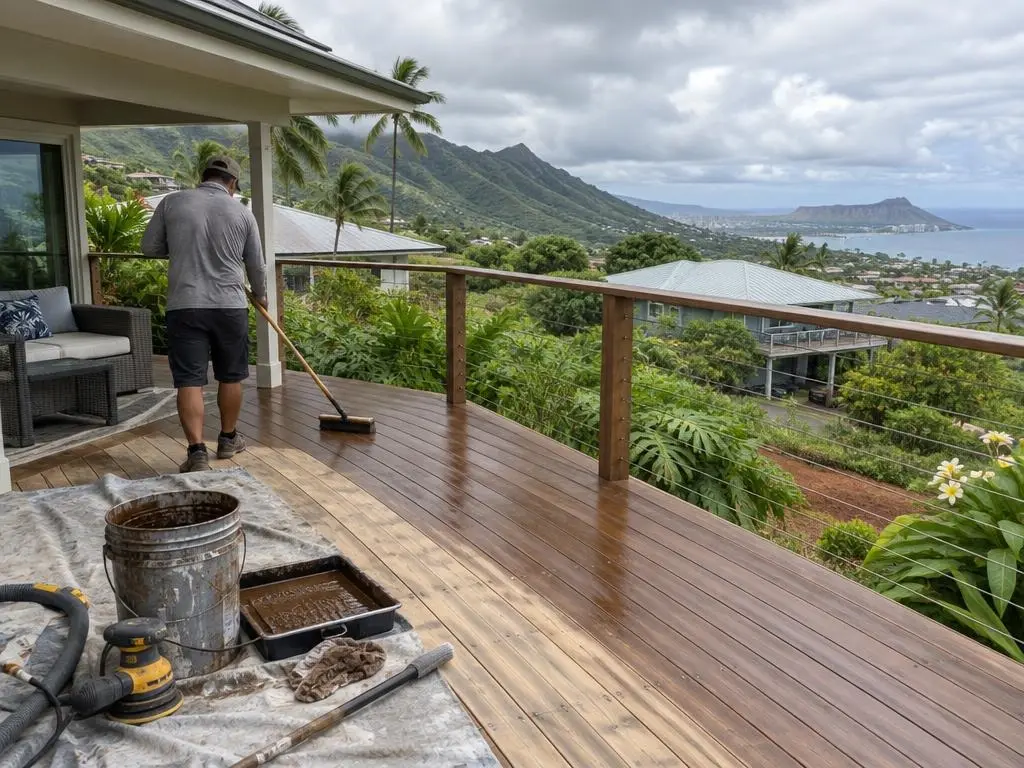
With about 278 sunny days a year in Honolulu, bare wood loses its color within months. A penetrating oil or semi-transparent stain with UV protection slows that down, and it has to be renewed. We talk through the finish and how often it will need to be redone before you pick a species, because upkeep is the real long-term cost of a wood deck.
Hardware and treated lumber
Modern copper-based treatments are more corrosive to steel than old lumber was, and salt air adds to it. Simpson Strong-Tie recommends stainless steel for treated wood in its harshest exposures and notes that hot-dip galvanized hardware may suit drier service. We match the connectors and screws to the lumber treatment and how close you are to the ocean.
Good fits for wood
Wood works well for small ground-level decks, shaded decks where heat is not a concern, decks that should match an older home, and projects where budget leads. If you would rather never refinish, we will also price composite boards on the same frame.
What This Covers
Every wood deck is built from the footings up with lumber matched to its exposure.
Pressure-treated decks
Above-ground and ground-contact lumber used where each rating belongs.
Cedar and redwood decks
Naturally decay-resistant softwoods for a warmer look.
Hardwood decks
Ipe and other dense tropical hardwoods, pre-drilled and fastened for long life.
First finish
A UV-protective oil or stain applied once the wood is ready to take it.
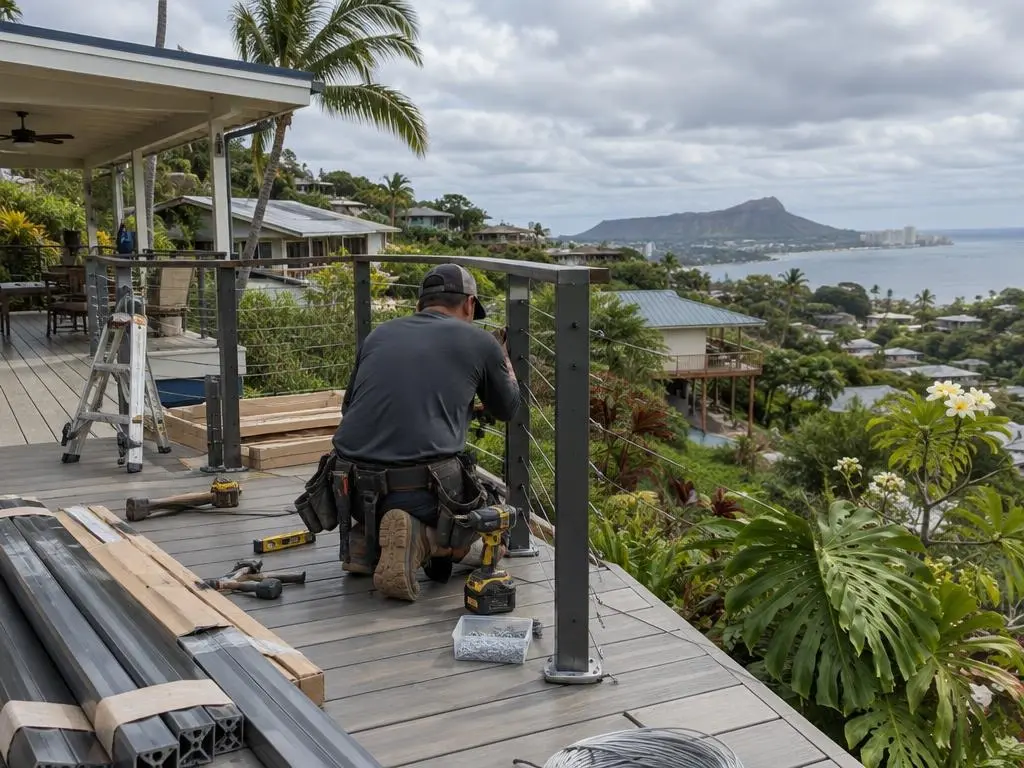
Typical Wood Deck Costs
| Material | Installed, per sq ft (national) |
|---|---|
| Pressure-treated wood | $15 to $25 |
| Cedar | $19 to $29 |
| Redwood | $27 to $38 |
| Ipe | $30 to $55 |
| Overall deck build (all materials) | $30 to $60 (Angi, 2026) |
Material rows are Fixr's national installed ranges (last updated 2023; Fixr noted materials were expected to rise). The overall row is Angi's 2026 national figure. Oahu labor and shipping often run higher. The price you pay is the one on your signed written estimate.
How It Works
1. Look at the site
We check soil, slope, shade and the house wall the deck will attach to.
2. Choose the wood
We compare species, treatment and upkeep, and write it into the quote.
3. Permit and build
Drawings go to DPP for the permit, then footings, frame and boards go in.
4. Finish and walk-through
The first protective coat goes on when the wood is ready, then we review it with you.
Wood Deck Building Questions
What wood is best for a deck in Hawaii?
It depends on budget and upkeep. Pressure-treated lumber with the right use rating is the most common choice, cedar and redwood resist decay naturally, and dense hardwoods like ipe last a long time at a higher price. The frame and posts need ground-contact or exterior-rated lumber either way.
Can I use HiBor lumber for my deck?
Not for exposed deck parts. The supplier's guide says HiBor's warranty excludes decking, deck framing and lumber exposed to weather without paint or cover. Outdoor deck framing needs lumber rated for exterior or ground-contact use.
How long does a wood deck last in Honolulu?
There is no single number. Footings that keep wood off the soil, the right treatment rating, good drainage and regular finishing make the biggest difference. A deck built with wood touching the ground or with trapped moisture can fail far sooner.
How often does a wood deck need to be sealed here?
Under Honolulu's strong sun, plan on renewing the finish more often than mainland guides suggest. When water stops beading and the color fades, it is time. We can tell you what to expect for the species you choose.
Wood Deck Building Service Areas
- Deck Builders in Honolulu, HI
- Deck Builders in Kailua, HI
- Deck Builders in Kaneohe, HI
- Deck Builders in Hawaii Kai, HI
- Deck Builders in Aiea, HI
- Deck Builders in Pearl City, HI
- Deck Builders in Kapolei, HI
- Deck Builders in Ewa Beach, HI
- Deck Builders in Mililani, HI
- Deck Builders in Waipahu, HI
- Deck Builders in Wahiawa, HI
- Deck Builders in Waimanalo, HI
- Deck Builders in Manoa, HI
- Deck Builders in Kaimuki, HI
- Deck Builders in Haleiwa, HI
- Deck Builders in Kahala, HI
- Deck Builders in Makakilo, HI
- Deck Builders in Waianae, HI
Get a Wood Deck Building Estimate
Free estimates for wood decks in Honolulu.