
Shade and rain cover for outdoor living
Covered Decks & Lanai Covers in Honolulu, HI
A roof over the deck makes it usable at noon and in a passing shower, if it is built to stay put in the wind.
- Free on-site estimates
- Written, itemized quotes
- Help with permit drawings and the DPP application
Shade That Holds Up to the Trades
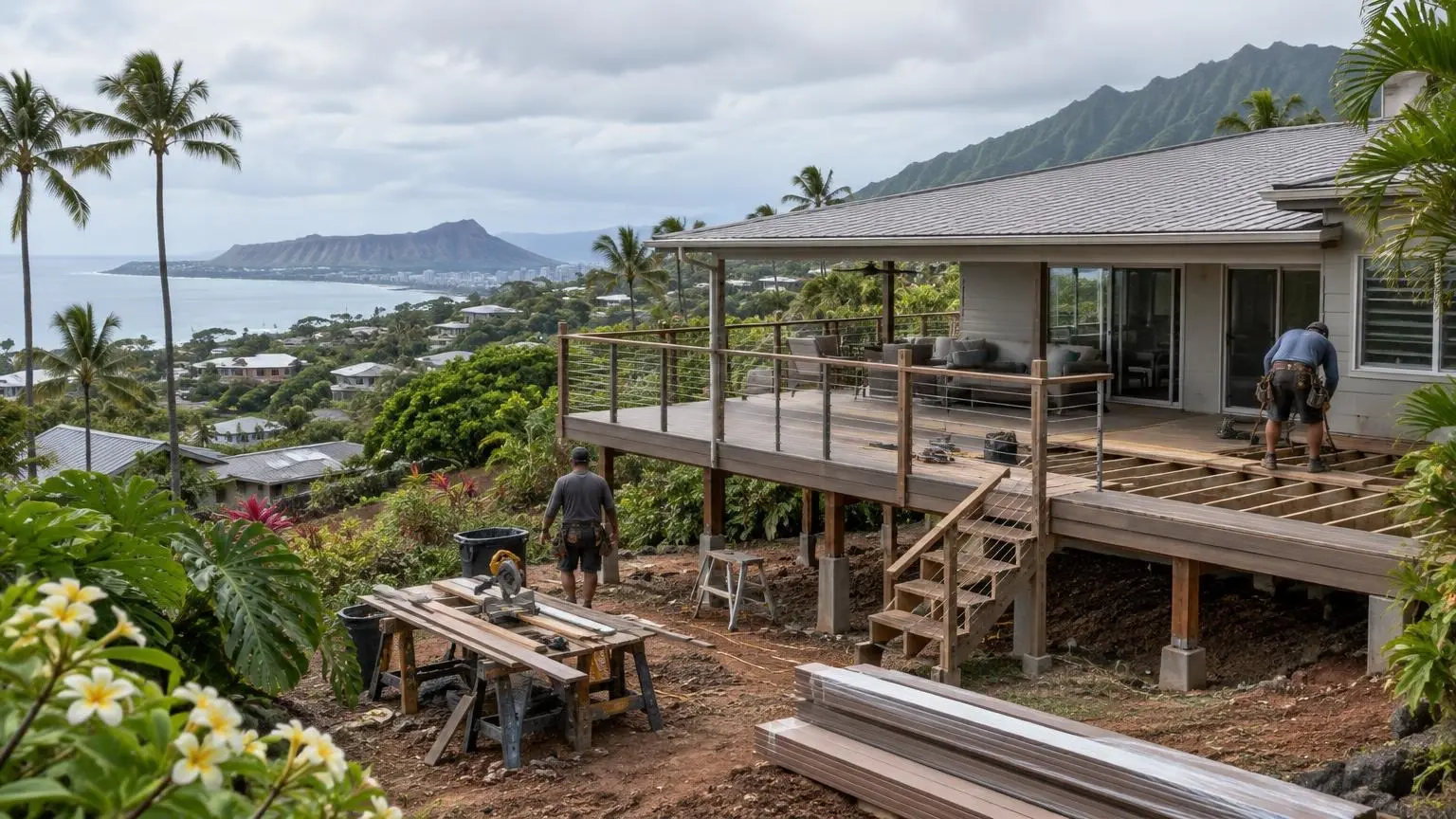
Covered decks and lanai covers turn a deck that sits empty in the midday sun into the most-used room of the house. In Honolulu, where the UV index peaks above 12 in summer and windward showers can pass through in minutes, a cover is often worth more than extra deck space. The catch is wind. A roof is a large flat surface, and the National Weather Service notes that trade winds blow about 90% of the time in summer and can reach 30 mph or more for days in early spring. A cover has to be designed for uplift, not just for weight.
Types of covers
- Solid roof extensions: tied into the house roof or built as a separate structure, keeping rain and sun off completely
- Open pergolas: rafters or louvers that filter sun and let air move, with less wind load
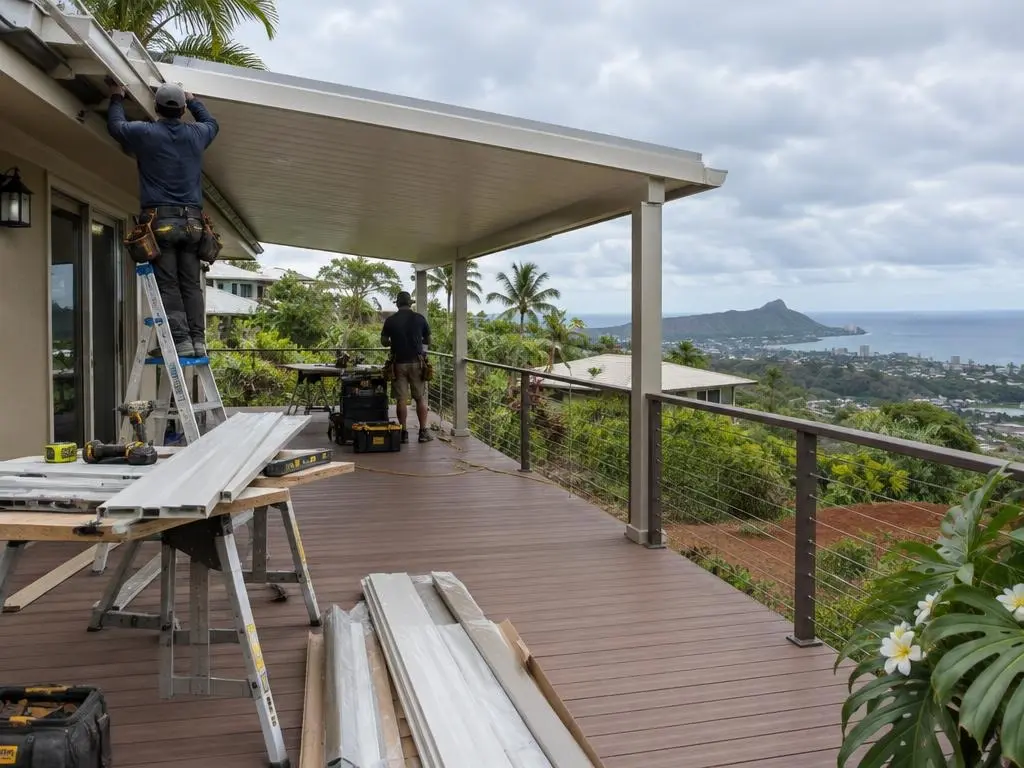
- Aluminum patio covers: light, low-maintenance and not food for termites, available insulated or open
- Wood-framed lanai roofs: a traditional look that can match older homes, built with rated lumber
We help you pick based on how you want to use the space, how much rain reaches it, and how the house roof is built.
Wind and tie-downs
Every post, beam and rafter connection in a cover needs to resist being lifted, not only pushed down. That means sized footings, uplift connectors at the post bases and beams, and rafter ties at each rafter. Where a cover attaches to the house, the ledger connection and flashing have to be right, or the cover can pull at the house wall in a strong gust and let water in. We draw all of this for the permit.
Termites and salt
Wood covers face the same Formosan termite risk as wood decks, so posts stand on footings with standoff bases, never buried. Aluminum frames avoid the termite issue but still need hardware that will not corrode against them near the ocean. We choose fasteners for the exposure and keep dissimilar metals apart where they could corrode.
Permits for covers
Roofed structures are building work, and the City and County of Honolulu treats them that way. A new cover usually goes through a DPP building permit with drawings, just like a new deck. Setback limits on smaller Honolulu lots can also affect how far a cover can extend toward a property line. We look at the lot early so the design fits the rules before it is drawn in detail.
Light, heat and fans
A solid roof can make the house darker behind it. Skylight panels, a higher roof pitch or an open pergola section can keep light coming in. Many owners also want a ceiling fan or lights under the cover; that electrical work must be done by a state-licensed electrician, and we plan the blocking and wire path so it can be added cleanly.
Putting a roof over a deck you already have
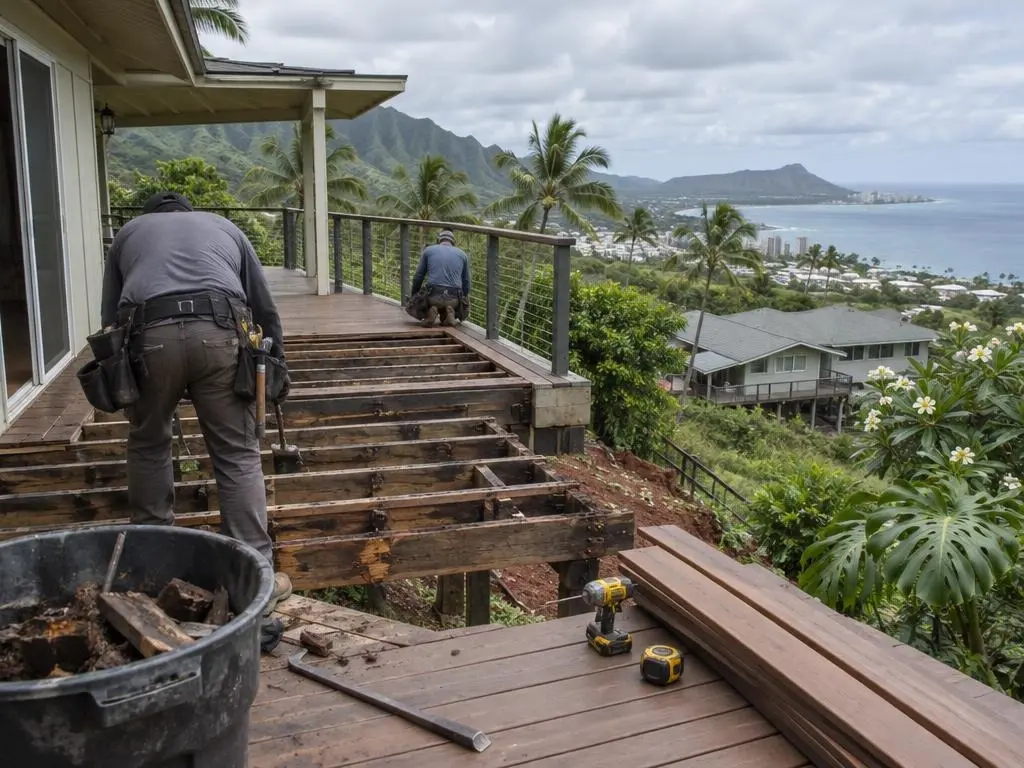
An older deck was rarely built to carry roof posts. We check whether the existing footings and beams can take the added load or whether the cover needs its own posts and footings beside the deck.
What This Covers
Covers can go over new decks, existing decks or ground-level lanai.
Solid roof covers
Full rain and sun protection, attached to the house or freestanding.
Pergolas
Open rafters or louvers for filtered shade and better airflow.
Aluminum lanai covers
Low-maintenance frames with open or insulated roof panels.
Uplift-rated framing
Footings, post bases and rafter ties detailed for trade-wind loads.
Typical Covered Deck and Lanai Cover Costs
| Item | Published national range |
|---|---|
| Covered deck, installed | $40 to $100 per sq ft (Fixr) |
| Roof added over a deck | $3,000 to $10,000 (HomeAdvisor) |
| Pergola | $30 to $60 per sq ft (HomeAdvisor) |
| Patio enclosure | $20 to $75 per sq ft (HomeAdvisor) |
| Awning | $1,200 to $3,700 (HomeAdvisor) |
National figures from Fixr (last updated 2023) and HomeAdvisor (2026). Wind design, footings and roof tie-ins can add cost on Oahu, and electrical work is separate. The price you pay is the one on your signed written estimate.
How It Works
1. Site visit
We look at the deck or lanai, the house roof, wind exposure and setbacks.
2. Design
You choose the cover type, and we draw the framing and tie-downs.
3. Permit
Drawings go to DPP through HNL Build.
4. Build
Footings, posts, beams and roof go up, with city inspections.
Covered Decks & Lanai Covers Questions
Do I need a permit for a lanai cover in Honolulu?
A roofed cover is building work, and in most cases it needs a DPP building permit with drawings. We help prepare the drawings and walk you through the HNL Build application. If you are unsure about a small shade structure, we check with the city first.
Will a patio cover hold up to strong winds?
It will if it is designed for uplift. That means footings sized for the load, uplift connectors at posts and beams, rafter ties, and a sound connection to the house. We detail these on the permit drawings.
Is aluminum or wood better for a lanai cover?
Aluminum resists termites and needs little upkeep, and it comes in open or insulated panels. Wood offers a traditional look and can match older homes, but needs termite-aware detailing and regular finishing.
Can you add a roof over my existing deck?
Often, but older decks were rarely built to carry roof posts. We check the footings and beams, and if they cannot take the load, the cover gets its own posts and footings.
Covered Decks & Lanai Covers Service Areas
- Deck Builders in Honolulu, HI
- Deck Builders in Kailua, HI
- Deck Builders in Kaneohe, HI
- Deck Builders in Hawaii Kai, HI
- Deck Builders in Aiea, HI
- Deck Builders in Pearl City, HI
- Deck Builders in Kapolei, HI
- Deck Builders in Ewa Beach, HI
- Deck Builders in Mililani, HI
- Deck Builders in Waipahu, HI
- Deck Builders in Wahiawa, HI
- Deck Builders in Waimanalo, HI
- Deck Builders in Manoa, HI
- Deck Builders in Kaimuki, HI
- Deck Builders in Haleiwa, HI
- Deck Builders in Kahala, HI
- Deck Builders in Makakilo, HI
- Deck Builders in Waianae, HI
Get a Covered Decks & Lanai Covers Estimate
Free estimates for covered decks and lanai covers.