
Low-maintenance boards for a hard climate
Composite Deck Building in Honolulu, HI
Boards that skip the yearly staining, set on a frame that is protected just as carefully as a wood deck.
- Free on-site estimates
- Written, itemized quotes
- Help with permit drawings and the DPP application
Why Composite Suits Oahu, and Where It Does Not
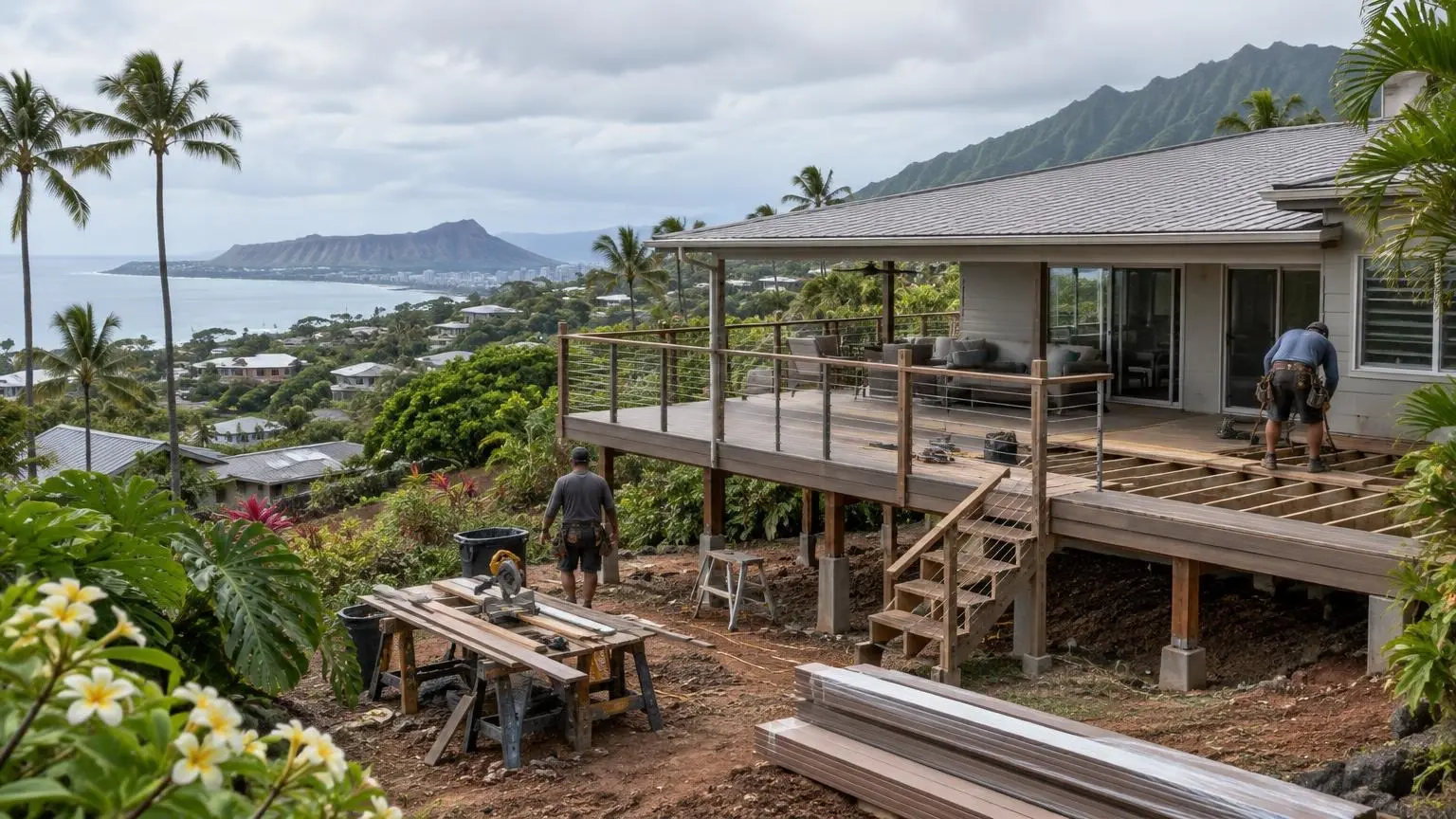
Composite deck building appeals to many Honolulu owners who are tired of re-staining wood every year or two under the sun. Composite boards are made from a blend of wood fiber and plastic, and the better lines add a hard polymer cap over the core. They do not rot or splinter the way wood does, and they are not a meal for termites. What they are not is a complete answer: the boards sit on joists, beams and posts, and on most decks that frame is still lumber.
The frame underneath still matters
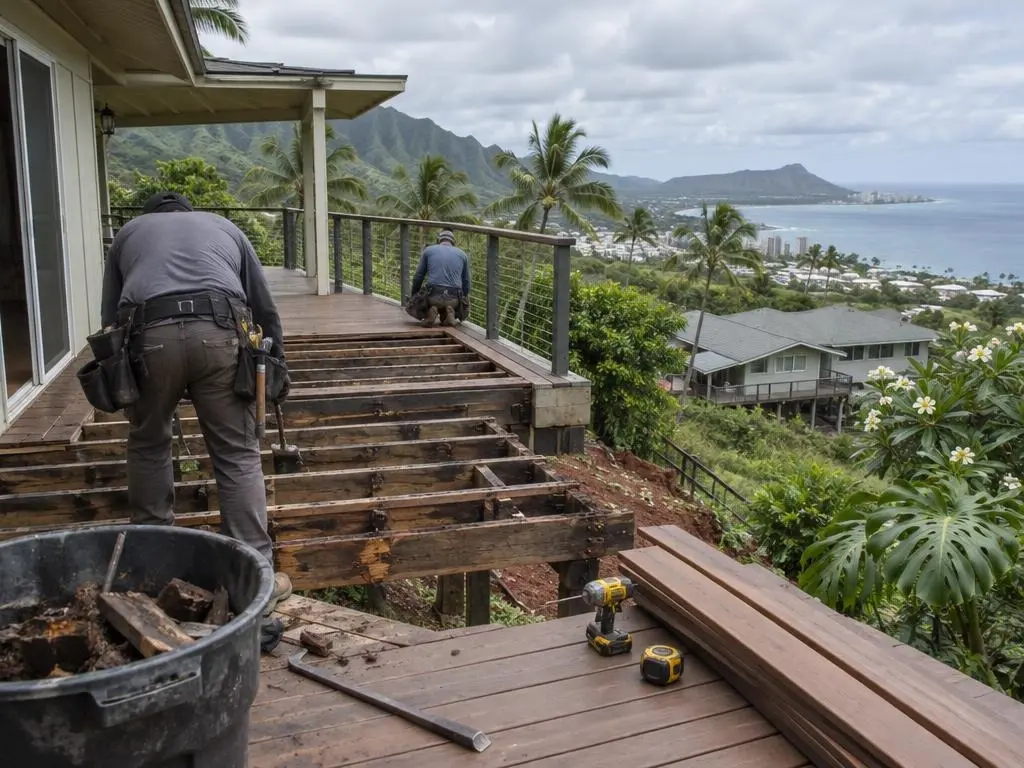
A composite surface can outlast the wood beneath it by years. On Oahu the threats to that frame are Formosan subterranean termites coming up from the soil and moisture trapped on top of joists. We set posts on concrete footings or raised bases, use framing lumber rated for exterior exposure, keep the frame clear of the ground and leave room to inspect underneath. Many builders also cover the tops of joists with butyl joist tape so water does not sit in the screw holes; we include it and note it on the quote. On some raised or oceanfront decks we price a steel or aluminum frame as an option.
Heat and color
Honolulu's UV index averages 9.7 over the year and runs above 12 in midsummer. Dark composite boards in full sun get hot enough to be uncomfortable on bare feet, which matters on a deck people walk across barefoot all day. Lighter colors, boards marketed for lower heat absorption, and a cover or shade sail over the main sitting area all help. We bring samples to the site so you can feel them in the sun where the deck will be.
Spacing, ventilation and wind
Composite expands and contracts with temperature more than wood does, so manufacturers publish gap and end-spacing rules, and those rules change with board length and install temperature. Boards also need airflow underneath; a deck built tight to the ground with no ventilation can trap heat and moisture. On windward lots that face the northeast trades, we pay attention to how the wind reaches the underside, since lightweight fascia and skirting need to be fastened for it.
Fasteners near the ocean
Hidden clip systems and face screws both have to be compatible with the board line and the exposure. Near the water we use stainless steel screws and clips, and stainless or hot-dip galvanized connectors on the frame, following the manufacturer's coastal guidance. Ordinary coated screws can streak and fail in salt air within a few years.
Warranties as information
Composite manufacturers offer their own limited warranties on the boards, usually covering structural defects and, on capped lines, fading and staining, with conditions about installation, spacing and fasteners. Those warranties come from the manufacturer, cover the boards only, and do not extend to the frame. We install to the published instructions so the manufacturer's terms are not put at risk.
Is composite right for your deck?
Composite is a good fit if you want little upkeep, the deck gets full sun, and you plan to stay in the home long enough for the higher upfront cost to pay back in skipped refinishing. Wood may make more sense on a small ground-level deck, in deep shade, or where budget is the main concern. We price both when you are undecided.
What This Covers
A composite deck project covers the surface and everything that holds it up.
Capped composite and PVC decking
Board lines chosen for color, heat and how they handle salt air and sun.
Protected framing
Exterior-rated lumber or metal framing on footings, with joist tape and clearance from the soil.
Hidden or face fastening
Clips and screws matched to the board line, in stainless steel where the exposure needs it.
Fascia, skirting and borders
Matching trim to cover the rim joists and finish the edges, fastened for the wind.
Typical Composite Deck Costs
| Item | Published national range |
|---|---|
| Composite decking, installed | $25 to $54 per sq ft (Angi, 2026) |
| Composite decking, installed | $28 to $40 per sq ft (Fixr) |
| Composite boards, materials only | $12 to $22 per sq ft |
| Typical composite deck with railing (about 320 sq ft) | about $14,000 national average (Fixr) |
| Building permit | $230 to $500 (national, Angi) |
National ranges from Angi (2026) and Fixr (last updated 2023). Honolulu labor and shipped materials usually push prices above national figures, and height, slope and hardware choices change the total. The price you pay is the one on your signed written estimate.
How It Works
1. Site visit
We check soil, slope, sun, wind exposure and how the deck meets the house.
2. Design and samples
You see the layout, frame and board samples in your own light.
3. Permit
We help prepare the drawings for the DPP application on HNL Build.
4. Build and inspect
Footings, frame, boards and trim go in, with city inspections along the way.
Composite Deck Building Questions
Do termites eat composite decking?
Composite boards are not a food source for termites the way solid wood is, but the frame under most composite decks is still wood. That frame needs the same protection as any wood deck: footings, rated lumber, and clearance from the soil.
Does composite decking get too hot in Hawaii?
Dark boards in direct sun can get uncomfortably hot. Lighter colors, heat-reducing board lines and shade over the main seating area help. We bring samples so you can test them in the sun on your site.
How much does a composite deck cost in Honolulu?
National guides put installed composite at about $25 to $54 per square foot (Angi, 2026). Prices on Oahu often run higher because of labor and shipping. After the site visit you get an itemized price in writing.
Can composite be installed over my old deck frame?
Sometimes. Composite often needs closer joist spacing than old wood decking, and an old frame may have hidden termite or rot damage. We inspect the frame first and tell you whether it can be reused, reinforced or should be replaced.
Composite Deck Building Service Areas
- Deck Builders in Honolulu, HI
- Deck Builders in Kailua, HI
- Deck Builders in Kaneohe, HI
- Deck Builders in Hawaii Kai, HI
- Deck Builders in Aiea, HI
- Deck Builders in Pearl City, HI
- Deck Builders in Kapolei, HI
- Deck Builders in Ewa Beach, HI
- Deck Builders in Mililani, HI
- Deck Builders in Waipahu, HI
- Deck Builders in Wahiawa, HI
- Deck Builders in Waimanalo, HI
- Deck Builders in Manoa, HI
- Deck Builders in Kaimuki, HI
- Deck Builders in Haleiwa, HI
- Deck Builders in Kahala, HI
- Deck Builders in Makakilo, HI
- Deck Builders in Waianae, HI
Get a Composite Deck Building Estimate
Free estimates for composite decks in Honolulu.